


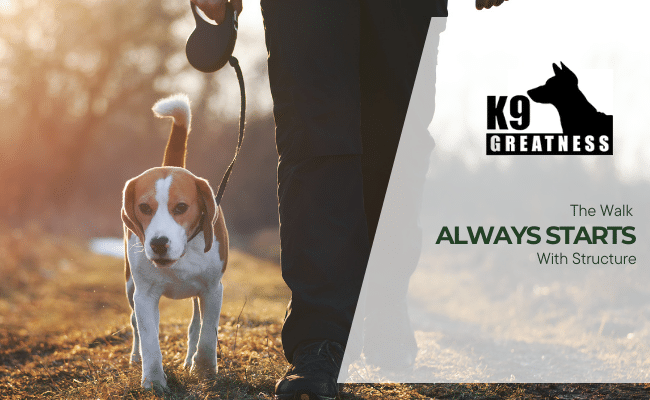
Every successful walk begins the same way: with structure.
Structure creates clarity. Clarity creates calm.
Before freedom is ever introduced, the dog needs to understand one thing — we move together. The walk doesn’t start with wandering, sniffing, or decision-making. It starts with purpose.
This isn’t about control for control’s sake. It’s about setting the tone so the dog doesn’t feel the need to take charge.
Pack Drive Comes First
The walk begins in pack drive: movement together, same direction, same pace.
This switches the dog out of individual decision-making and into follower mode. It taps into something instinctive — think migration, not wandering. When dogs move as part of a group, leadership becomes clear without force or confrontation.
Pack drive lowers arousal naturally. There’s no excitement yet, no scanning the environment for stimulation. The dog is simply moving with you.
Heel Work Is About Mindset, Not Position
Heel isn’t about a perfect position by your leg. It’s about mindset.
In heel, the dog yields spatial control and mental control. They stop making constant decisions and start taking cues from you. This is where leadership is communicated quietly — no shouting, no bribery, no tension.
When heel work is done properly, engagement becomes automatic. The dog doesn’t need to be reminded you exist — they already know.
Freedom Is Earned, Not Demanded
Only once structure is established does freedom come into play.
Freedom works because it follows discipline. It becomes meaningful, not chaotic. The dog understands that calm behaviour and engagement lead to more options, not fewer.
Without structure first, freedom is just chaos with a lead attached. The dog rushes, pulls, scans, reacts — because nothing has been organised beforehand.
The Analogy Clients Instantly Understand
It’s like taking a child to a theme park.
No rules first?
They’re overstimulated, impulsive, and unsafe.
Rules first?
They enjoy the freedom properly.
Same child. Same park. Completely different outcome.
It’s no different with dogs.
Pros and Cons of This Approach
Pros
- Lowers arousal before it has a chance to spike
- Builds automatic engagement without constant cues
- Makes recall and neutrality inevitable, not hopeful
Cons
- Owners have to lead before they relax
- Dogs with controlling mindsets will test it early
That second “con” isn’t actually a problem — it’s useful information. It tells you exactly where the work needs to happen.
Structure Creates Freedom
This approach isn’t about restricting dogs. It’s about giving them the right framework to succeed.
When the walk starts with structure, the rest of it takes care of itself. Calm replaces chaos. Engagement replaces tension. Freedom becomes safe, enjoyable, and sustainable.
Same dog. Different outcome.
Start leading today, and you’ll see the difference sooner than you think.
👉 Book a session and start transforming your walks:
🐾 Training for life, not just for today.